Publication
16. Systematics and phylogeny of the Andean genera Konradus Chani-Posse & Ramírez-Salamanca and Yuracarus gen. nov. (Coleoptera: Staphylinidae)
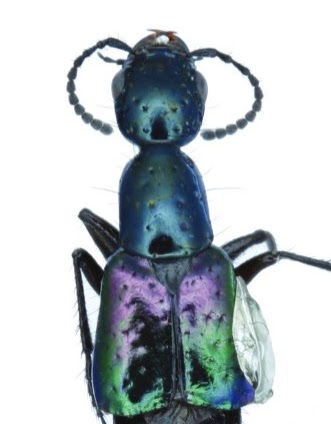
Authors: Chani-Posse, M.R.; Rodríguez-Melgarejo, M.E. & Ramírez-Salamanca, J.M.
Journal: Arthropod Systematics and Phylogeny, 83, 331–352.
Date:
Highlights
Abstract
Introduction
Konradus Chani-Posse & Ramírez-Salamanca, 2020 was originally described as a monotypic genus from the tropical Andes of Ecuador. However, a re-examination of type material from species previously classified under the genus Philonthus Stephens, 1829, along with additional, previously unstudied specimens collected from high-altitude regions (above 2000 m) in the Andes of Ecuador, Peru, and Bolivia, prompted a more comprehensive reassessment of the genus.
Material & Methods
This study presents a revision of Konradus and introduces Yuracarus gen. nov., based on external morphology and male and female sexual characters. A key to species, diagnoses, descriptions and/or redescriptions, illustrations, a distributional map, and a phylogenetic analysis are included.
Results
Two species previously considered “false Philonthus” (Ph. actinus Bernhauer, 1917 and Ph. diamantinus Bernhauer, 1917) are transferred to Konradus and Yuracarus gen. nov., respectively: K. actinus (Bernhauer), new comb., and Y. diamantinus (Bernhauer), new comb. Additionally, two species from Peru are newly described within Konradus: K. cuscensis sp. nov. and K. trescrucensis sp. nov., while three new species are described within Yuracarus: Y. cosnipatensis sp. nov., Y. napoensis sp. nov., and Y. yunguensis sp. nov. Lectotypes are designated for Philonthus actinus Bernhauer and Philonthus diamantinus Bernhauer. Cladistic analysis confirms the monophyly of Konradus and Yuracarus within the Andean clade (AC) of Neotropical Philonthina and supports Yuracarus as a distinct genus. Both genera are part of a well-supported clade characterized by the presence of sub-bilobed and subtriangular protarsomeres 2 and 3, bearing discal setae on their ventral surface, as well as a horseshoe-shaped accessory sclerite associated with female tergum 10.