Publication
14. Two new species of the Andean genera Leptopeltus Bernhauer and Leptopeltoides Chani-Posse & Asenjo (Coleoptera: Staphylinidae: Staphylininae) from the tropical Andes, with a new country record and an updated phylogeny
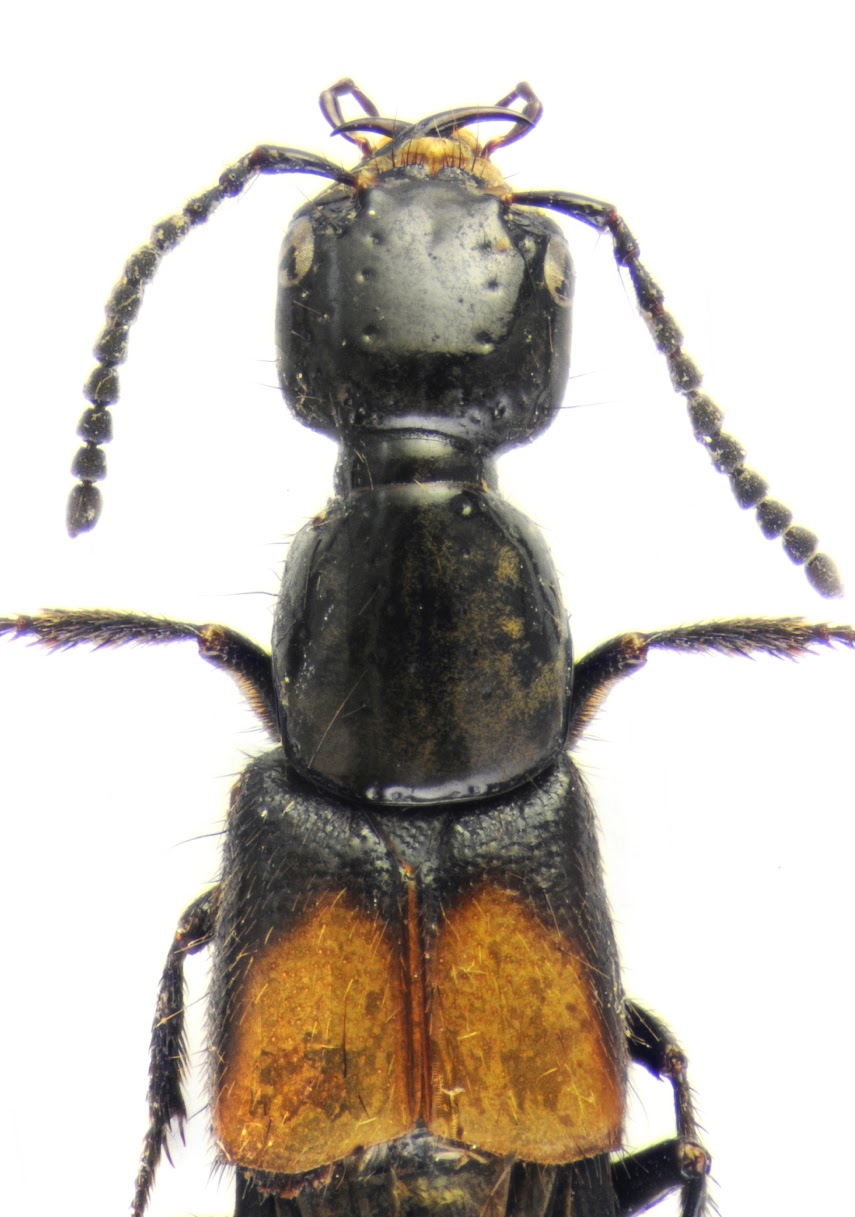
Authors: Rodríguez-Melgarejo, M. & Chani-Posse, M.
Journal: Zootaxa, 5501(2), 345–357.
Date:
Highlights
Abstract
Introduction
The tropical Andes are known as a biodiversity hotspot with the highest percentage of endemic plants and vertebrates in the world. The Andean genera Leptopeltus Bernhauer and Leptopeltoides Chani-Posse & Asenjo contain six and four species respectively, most of which occur in the Andean highlands near 3000 m. Here, we describe two new species of the subtribe Philonthina, recently discovered in the northern Peruvian Andes: Leptopeltus dieguezi sp. nov. and Leptopeltoides nilveri sp. nov.
Material & Methods
To test the phylogenetic position of these new taxa, a dataset of 50 morphological characters scored for 16 taxa, including all currently known species of Leptopeltus, and Leptopeltoides, was prepared and analysed by maximum parsimony.
Results
Our analysis clearly placed L. dieguezi sp. nov. and Le. nilveri sp. nov. within Leptopeltus and Leptopeltoides, respectively, each of them in a well-supported clade. In addition, Le. nilveri sp. nov. represents the first country record of the genus for Peru. An updated phylogeny and distribution map of the species of Leptopeltus and Leptopeltoides, as well as revised keys to the species of these two genera, are provided.