Publication
17. Integrative systematics reveals new brachypterous genera and sheds light on hind wing evolution in the neotropical lineage of Philonthina (Coleoptera: Staphylinidae)
Authors: Rodríguez-Melgarejo, M.E.; Ramírez-Salamanca, J.M. & Chani-Posse, M.R.
Journal: Invertebrate Systematics, 39(11), 1–25.
Date:
Highlights
Abstract
Introduction
Philonthina, the most diverse subtribe of the rove beetle tribe Staphylinini, is predominantly composed of taxa with fully developed hind wings and flight capability. However, notable exceptions include three taxa exhibiting partially developed hind wings.
Material & Methods
To test their phylogenetic affiliations, we used a total-evidence approach across three inference methods. Ancestral state reconstruction was conducted to explore, for the first time, hind wing evolution within the Andean clade of the Neotropical lineage of Philonthina.
Results
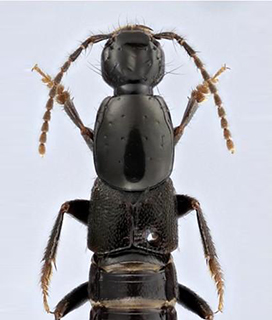
We identified two new brachypterous genera: Andinolonthus gen. nov. and Brachylonthus gen. nov., each represented by a new species, whereas Atopocentrum mirabile Bernhauer, 1906 is confirmed as brachypterous. All three genera were recovered within the Andean clade of the Neotropical lineage of Philonthina. These brachypterous genera are described and illustrated, and their distributions mapped. This analysis reveals that fully developed hind wings were lost and subsequently regained within this lineage, highlighting the dynamic evolution of complex characters in high-altitude montane ecosystems.